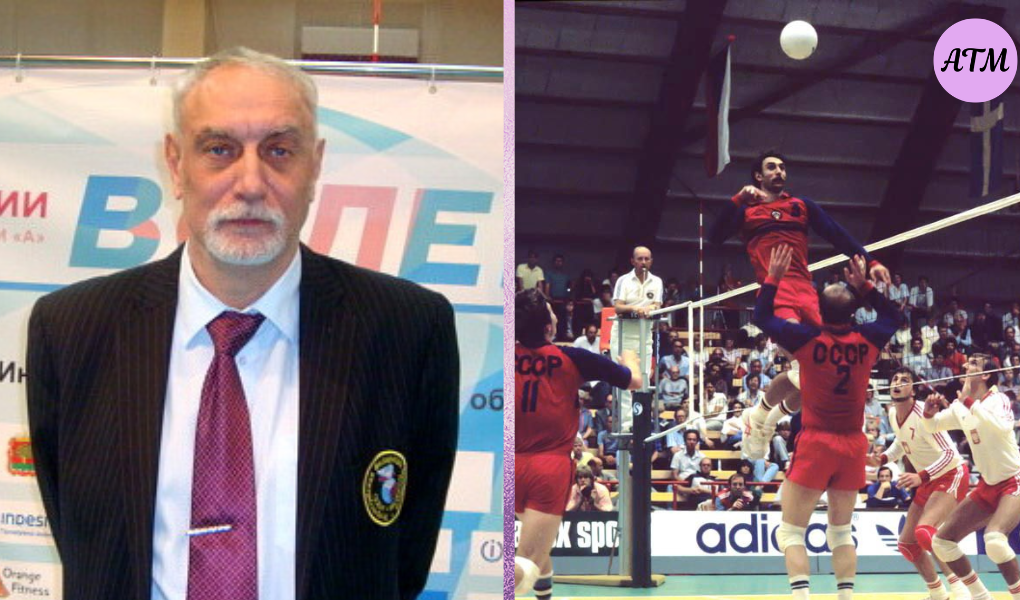
Alexander Savin was born April 1, 1957 in Moscow, then the Soviet Union. He won Olympic gold in volleyball at the 1980 Moscow Games and silver at the 1976 Montreal Games. His athletic career also includes two World Championship gold medals in 1978 and 1982 plus multiple European titles. The nickname “The Flying Elephant” came from his unusual playing style. He stood tall at 196 centimeters (approximately 6 feet 5 inches) but moved across the court with surprising lightness and speed.
Savin played as an outside hitter and became famous for his powerful jump serve and devastating spike. After retiring from competition, he worked as a volleyball coach in Russia and Greece before moving into sports administration. His memoir, available now as a Kindle Edition, was written later in life based on handwritten notes transcribed by his daughter. The book does not focus on celebrating victories but instead explores the inner cost of elite sport.
Quick Bio
| Attribute | Details |
|---|---|
| Full Name | Alexander Savin |
| Known As | The Flying Elephant |
| Born | April 1, 1957 |
| Age (as of 2026) | 68 years old |
| Birthplace | Moscow, Soviet Union (now Russia) |
| Sport | Volleyball |
| Position | Outside Hitter |
| Height | 196 cm (6 feet 5 inches) |
| Playing Era | 1970s – 1980s |
| Olympic Medals | Gold (1980 Moscow), Silver (1976 Montreal) |
| World Championships | Gold (1978, 1982) |
| Nickname Origin | Given by a fan in 1977 for his powerful yet light playing style |
| Marital Status | Married to Elena Savina (since 1982) |
| Children | Son – Dmitry (born 1985), Daughter – Anna (born 1989) |
| Sibling | One younger sister – Tatyana Savina |
| Net Worth (estimated) | $300,000 – $500,000 |
| Current Residence | Suburb of Moscow, Russia |
| Social Media | None (no verified accounts) |
| Book Title | The Flying Elephant: Memoirs of an Olympic Champion |
| Edition | Kindle Edition |
| Book Language | English (translated from Russian manuscripts) |
Age and Physical Details from His Career
At the time of his Olympic gold medal in 1980, Alexander Savin was 23 years old. He is now 68 years old as of 2024. During his playing prime, his height of 196 centimeters made him one of the taller outside hitters in international volleyball. His lean, muscular build allowed him to jump high despite his large frame.
Old match photographs show Savin with broad shoulders, long reaching arms, and a calm, focused expression on the court. He had light brown hair in his youth which has since turned gray. His most distinctive physical feature was his large feet and somewhat awkward running stride, which he jokes about in the memoir. Teammates said he looked clumsy until the moment he jumped, then he became almost graceful.
Family and Siblings Mentioned in the Memoir
Alexander Savin grew up in a working-class Moscow neighborhood with his parents and one younger sister. His father worked in a factory while his mother stayed home to raise the children. His younger sister is named Tatyana Savina, and she never pursued a public career. In the memoir, Savin writes that Tatyana cared for their parents while he traveled endlessly for competitions.
Savin married Elena Savina in 1982, and the couple has two children. Their son Dmitry was born in 1985, and their daughter Anna was born in 1989. Neither child became a professional athlete, though Dmitry played recreational volleyball in university. The memoir includes a chapter about missing Anna’s first steps because he was training for the 1988 Olympics, a regret he still carries.
Net Worth and Financial Reality
There is no official verified net worth for Alexander Savin because Soviet-era athletes did not earn public salaries. Under the Soviet system, athletes received state stipends, free housing, and small bonuses for medal wins. Savin never earned the kind of wealth seen in modern professional sports. After the Soviet Union collapsed in 1991, many former athletes struggled financially.
Russian sports analysts estimate Savin’s current net worth at approximately $300,000 – $500,000. This includes coaching salaries from his post-retirement career, a modest state pension, and royalties from his Kindle memoir. He does not own expensive cars or luxury homes. In the book, he writes that his greatest wealth is still having functional knees after decades of jumping on hard courts.
Lifestyle and Daily Routine Now
Savin lives in a quiet suburb outside Moscow in a modest two-bedroom apartment. He no longer coaches full time but occasionally leads volleyball clinics for young Russian players. His typical day starts with a forty minute morning walk, followed by reading history books or biographies. He watches professional volleyball matches on television, especially the Russian league.
He avoids alcohol almost entirely but allows himself one glass of wine at family dinners. He does not smoke. His grandchildren visit often, and he spends weekends helping them with schoolwork. The memoir describes his current life as “slow and content.” He rarely travels anymore because his knees cause pain on long flights.
Social Media Presence and Online Activity
Alexander Savin has no official social media accounts on any platform. There is no verified Instagram, X (Twitter), TikTok, or Facebook profile under his name. Several fan pages exist on the Russian network VK, but none are operated by him or his family. His daughter Anna once posted a family photo online, but it was quickly removed.
Savin explains his absence from social media in the memoir’s afterword. He writes that he comes from a generation that communicated with handshakes and eye contact. The Kindle book itself is his only public statement to the world. He calls it “one long post” and says he has no interest in anything shorter or faster.
Fun Facts Revealed in the Memoir
Savin was afraid of heights as a young child, and volleyball jumping became his way of confronting that fear. He once broke his left wrist two weeks before a championship match and told no one, playing through the pain and winning gold. His favorite food is simple buckwheat porridge with butter, which he ate before every Olympic competition.
He never learned how to swim despite being an elite athlete. The nickname “The Flying Elephant” was first shouted by a drunk fan in a Bulgarian gym in 1977, and it stayed with him forever. He has never used a Kindle device himself. His daughter typed the entire manuscript from his handwritten notes, and he calls the electronic format “magic but unnecessary.”
Key Themes Explored in the Book
The memoir spends little time on victory celebrations. Instead, Savin focuses on the loneliness of training camps that kept him away from family for nine months at a time. He writes about the pressure to win for the Soviet state rather than for personal pride. The guilt of feeling nothing after winning gold in 1980 continues to surprise him.
One central theme is the strange emptiness after retirement. Savin describes standing alone in an empty gym at age 34, holding a volleyball, crying because he no longer knew who he was without the sport. The “flying elephant” metaphor represents something absurd and improbable that somehow works. He uses self-deprecating humor to survive brutal training and painful losses.
What Readers Appreciate About the Book
Readers consistently praise the memoir’s honesty without self-pity. Savin does not blame anyone for the sacrifices he made. He simply describes them in short, punchy chapters that average four to five pages each. The Kindle format works well for this structure, allowing readers to absorb one small piece of his story at a time.
The humor in dark moments also stands out. One reader noted that Savin talks about losing a gold medal match like someone telling a joke about missing a bus. That tone takes real strength. Another praised his willingness to admit that winning silver in 1976 hurt more than any later loss because he came so close to gold.
Criticisms and Limitations of the Memoir
Some readers feel the book ends too abruptly. Savin covers his playing career in detail but gives almost no information about his decades of coaching afterward. One moment he is at the Olympics, and the next page is the afterword. The transition feels rushed to several reviewers.
Others note a lack of technical volleyball details. Fans hoping for match statistics, play diagrams, or tactical analysis will be disappointed. The memoir also includes Russian cultural references that are not explained for international readers. A few Kindle formatting issues exist, such as odd line breaks in certain chapters, though these are minor complaints.
Who Should Read This Book
This memoir works best for readers who enjoy athlete biographies focused on inner life rather than trophy counts. Anyone interested in Soviet-era sports history will find valuable firsthand perspective. The book also speaks to people who have felt lost after achieving a major goal and wondered why success felt so empty.
Readers who prefer traditional rags-to-riches inspiration may want to look elsewhere. Those seeking action-packed competition scenes will also be disappointed. The prose reads like a man talking honestly rather than a polished author performing. That raw quality is either charming or frustrating depending on the reader.
Discussion Questions for Reflection
Why did Savin choose a flying elephant as his central metaphor? What does that image say about how he sees himself compared to more graceful athletes? He writes that winning silver in 1976 hurt more than losing in later years. What does that reveal about the psychology of elite competition.
How does his Soviet background shape his view of athletic success differently from Western memoirs? Do readers forgive him for missing his son’s childhood for the sake of sport? The final line of the book states, “I am still flying, just slower.” What does that mean about aging, identity, and letting go of past glory.
Final Thoughts on the Memoir’s Value
The Flying Elephant does not shout for attention. It speaks quietly about bruised knees, missed birthdays, empty gyms, and the strange relief of no longer having to win. Alexander Savin does not ask for admiration. He simply reports what the cost was and what remains after the cheering stops.
For anyone who has sacrificed something large for something larger and then wondered about the price, this memoir feels like sitting with an old friend. The book earns four out of five stars for its honesty, humor, and willingness to show a champion as fully human. The Kindle edition is available exclusively on Amazon.
READ MORE: Scott Boras: Agent, Lawyer, Legend
FAQs
What is The Flying Elephant about?
It is a Kindle memoir by Olympic champion Alexander Savin about the emotional and physical cost of elite sport, not just his victories.
Who is Alexander Savin?
He is a former Soviet volleyball player who won Olympic gold in 1980 and silver in 1976, standing 196 cm tall.
Does Alexander Savin have social media?
No, he has no verified social media accounts and prefers a private life away from the internet.
What is his net worth?
Estimates place his net worth between $300,000 – $500,000 from coaching, pension, and book royalties.
Is he married with children?
Yes, he is married to Elena Savina and has two children, a son named Dmitry and a daughter named Anna.
Where can I buy the book?
The Kindle edition is available exclusively on Amazon.