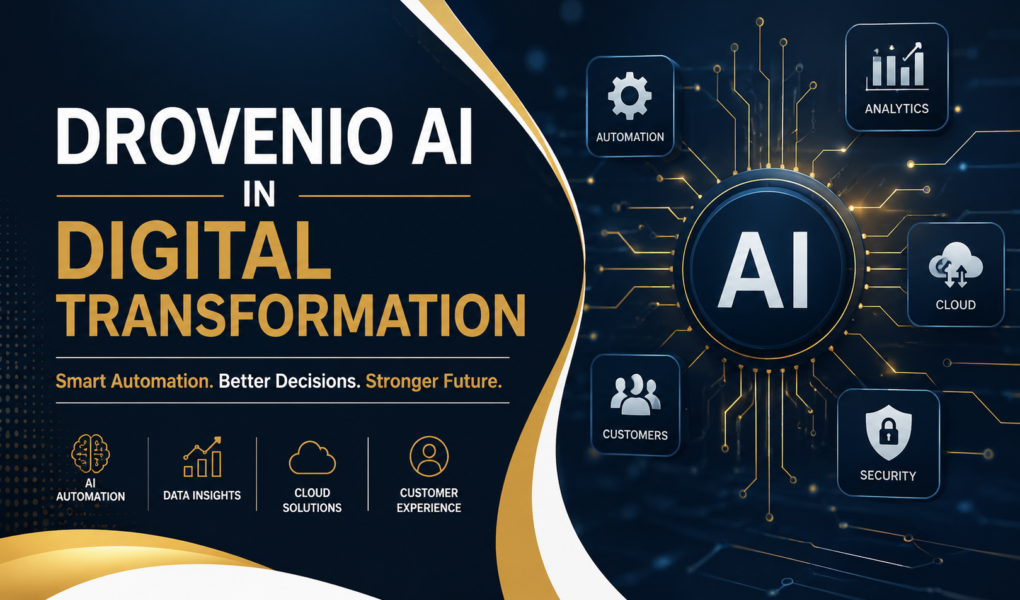
Artificial intelligence is becoming one of the biggest forces behind modern business growth. Companies around the world are now using digital systems to improve communication, manage operations, and provide better customer experiences. From healthcare to finance, businesses are moving toward smarter technologies that help them work faster and more efficiently. This major shift is known as digital transformation, and AI is playing a central role in shaping its future.
Drovenio AI in digital transformation is a topic gaining attention because it explains how businesses can use artificial intelligence in practical ways. Instead of focusing only on technical language, the concept highlights how AI can simplify daily business operations, improve productivity, and help organizations make better decisions. As more companies move toward digital systems, AI-powered transformation is becoming an important part of long-term success.
Quick Details
| Quick Details | Information |
|---|---|
| Keyword | Drovenio AI in Digital Transformation |
| Category | Artificial Intelligence & Business Technology |
| Main Focus | AI-powered digital transformation for businesses |
| Purpose | Improving efficiency, automation, and decision-making |
| Technologies Used | Artificial Intelligence, Machine Learning, Cloud Computing, Automation |
| Main Benefit | Faster and smarter business operations |
| Popular Features | Smart automation, analytics, AI support systems |
| Used In Industries | Healthcare, Retail, Finance, Manufacturing, Education |
| Business Advantage | Better productivity and reduced operational costs |
| Customer Benefits | Faster support and personalized experiences |
| Role of AI | Automates tasks and analyzes business data |
| Digital Transformation Goal | Modernizing traditional business systems |
| Future Scope | Growing adoption across global industries |
| Common Tools | Chatbots, Predictive Analytics, Cloud Platforms |
| Work Style | Data-driven and technology-focused |
| Best For | Businesses, startups, and digital companies |
| Main Challenge | Data security and implementation costs |
| Future Trend | Human and AI collaboration |
| Related Topics | Automation, Smart Technology, AI Innovation |
| Overall Importance | Helps businesses stay competitive in the digital age |
What Is Drovenio AI in Digital Transformation?
Drovenio AI in digital transformation refers to the use of artificial intelligence technologies to modernize business operations and improve digital processes. It combines smart automation, machine learning, cloud systems, and predictive analytics to help companies become more efficient and adaptable. Businesses use these technologies to improve workflows, reduce repetitive tasks, and make more accurate decisions.
The idea behind this transformation is not simply about replacing people with machines. Instead, it focuses on helping organizations use intelligent systems to support employees and improve overall performance. Companies adopting AI-powered transformation often experience faster operations, better customer service, and stronger business growth in competitive markets.
Understanding Digital Transformation
Digital transformation means changing traditional business systems into modern digital operations. In the past, many companies depended heavily on paperwork, manual records, and time-consuming processes. Today, businesses are using cloud technology, digital platforms, and AI-powered tools to manage operations more effectively and improve communication across departments.
Artificial intelligence has become one of the most valuable parts of digital transformation because it can process large amounts of information quickly. AI systems help businesses analyze customer behavior, identify trends, and automate routine activities. This allows organizations to focus more on innovation, planning, and improving customer relationships.
Smart Automation
One of the strongest features connected with Drovenio AI is smart automation. Businesses often spend countless hours handling repetitive tasks such as organizing schedules, processing invoices, managing emails, and responding to common customer questions. AI-powered automation systems can complete these tasks accurately and much faster than manual processes.
Automation also improves workplace productivity because employees can focus on more meaningful responsibilities instead of repetitive administrative work. Companies using intelligent automation systems often experience smoother workflows, better time management, and improved operational efficiency. This creates a more organized and productive business environment.
Data Analytics and Insights
Modern businesses generate huge amounts of information every single day. AI-powered systems help organizations analyze this data and turn it into useful insights that support business growth. Companies can study customer behavior, market trends, and sales performance in real time, helping managers make more informed decisions.
Predictive analytics is another important advantage of AI-driven transformation. Businesses can forecast future trends, understand customer needs, and identify new opportunities before competitors. These insights help organizations improve planning strategies and reduce uncertainty in decision-making processes.
Customer Experience
Customer expectations have changed significantly in recent years. People now expect faster responses, personalized services, and smooth digital experiences. AI systems help businesses meet these expectations through intelligent customer support tools, virtual assistants, and automated communication systems.
Businesses also use AI to recommend products and services based on customer interests and previous activities. Personalized experiences make customers feel valued and improve satisfaction levels. Companies that provide strong digital experiences are more likely to build long-term trust and customer loyalty.
Cloud Technology
Cloud technology plays a major role in modern digital transformation because it allows businesses to store and manage information securely online. AI systems connected with cloud platforms help organizations access data from different locations while supporting remote work and flexible business operations.
Cloud-based infrastructure also helps businesses grow more easily. Companies can expand operations without depending heavily on traditional physical systems. Employees can collaborate more effectively, share information instantly, and access important tools from anywhere, improving overall business performance.
Machine Learning
Machine learning is one of the most advanced parts of artificial intelligence. Unlike traditional software systems, machine learning tools improve automatically by learning from data and user interactions. This allows businesses to continuously optimize operations and improve performance over time.
Organizations use machine learning systems to identify customer preferences, detect unusual patterns, and improve efficiency across different departments. These intelligent systems help businesses adapt quickly to changing market conditions and customer demands without requiring constant manual updates.
Business Efficiency
AI-driven digital transformation significantly improves business efficiency. Tasks that once required hours of manual effort can now be completed within minutes through intelligent automation systems. This saves time, reduces operational delays, and improves overall productivity.
Businesses also experience fewer human errors when using AI-powered tools. Automated systems can handle large amounts of information with high accuracy, helping organizations maintain better workflow management. Improved efficiency allows companies to focus more on innovation and business development.
Better Decision-Making
One of the biggest benefits of artificial intelligence is its ability to support better decision-making. AI systems analyze real-time information and provide valuable insights that help managers understand business performance more clearly. Organizations can use these insights to improve planning and identify future opportunities.
Data-driven decisions are often more reliable than decisions based on assumptions or outdated information. AI analytics tools help businesses understand customer behavior, monitor trends, and predict future market changes. This gives organizations a stronger competitive advantage in modern industries.
Cost Reduction
Businesses are always searching for ways to reduce costs while maintaining quality services. AI-powered systems help lower operational expenses by automating repetitive work and improving resource management. Many businesses can complete tasks with fewer manual processes, reducing unnecessary spending.
Improved efficiency also helps companies avoid costly errors and delays. Businesses using intelligent systems can manage time, resources, and operations more effectively. Over time, AI transformation can create significant financial savings and improve long-term profitability.
Industry Applications
Many industries are already benefiting from AI-powered digital transformation. Healthcare organizations use artificial intelligence to manage patient records, improve diagnostics, and support medical professionals with data analysis. These systems help hospitals improve efficiency and patient care.
Retail businesses use AI to personalize shopping experiences, manage inventory, and predict customer demand. Financial institutions rely on AI for fraud detection, automated customer service, and risk analysis. Manufacturing companies also use intelligent systems to improve production quality and reduce equipment downtime.
Challenges of AI Transformation
Although AI offers many advantages, businesses also face challenges during digital transformation. One major challenge is the high initial investment required for technology systems, cloud infrastructure, and employee training. Smaller organizations sometimes struggle to adopt advanced technologies because of financial limitations.
Cybersecurity and data privacy are also important concerns. AI systems depend heavily on digital information, making secure data protection essential for businesses. Organizations must ensure customer information remains safe and protected from cyber threats and unauthorized access.
Employee Adaptation
Some employees feel uncertain about artificial intelligence because they worry automation may replace jobs. However, many businesses are using AI as a support tool rather than a replacement for human workers. Organizations are focusing more on employee training and helping staff adapt to modern digital systems.
Human creativity, leadership, and communication skills remain extremely important even in AI-powered workplaces. Businesses that combine human talent with intelligent technology often achieve stronger productivity and better long-term success. AI works best when it supports employees instead of replacing them completely.
Future of AI in Digital Transformation
The future of AI in digital transformation looks very promising as businesses continue investing in advanced technologies. Intelligent automation, predictive analytics, and cloud-based systems are expected to become even more common across industries. AI tools are also becoming more affordable and accessible for smaller businesses.
Future AI systems may become more personalized and adaptive, allowing organizations to create highly customized customer experiences. Human and AI collaboration will likely become one of the biggest trends in the coming years. Companies that successfully balance technology with creativity may achieve stronger innovation and business growth.
Why Businesses Are Paying Attention
Modern businesses understand that digital transformation is no longer optional in today’s competitive economy. Organizations that ignore technological changes may struggle to meet customer expectations and market demands. AI-powered systems help businesses remain innovative, productive, and adaptable in fast-changing industries.
Companies investing in AI transformation today are preparing themselves for long-term growth and stability. Intelligent technologies allow businesses to improve operations, strengthen customer relationships, and respond quickly to new opportunities. This makes AI one of the most valuable tools in modern business development.
Final Thoughts
Drovenio AI in digital transformation highlights how artificial intelligence is reshaping the future of modern business. From automation and machine learning to predictive analytics and cloud systems, AI technologies are helping organizations improve efficiency and create better customer experiences. Businesses across healthcare, finance, education, retail, and manufacturing are already benefiting from intelligent digital systems.
As artificial intelligence continues evolving, its role in digital transformation will become even more important. Companies that embrace AI-powered innovation today may gain stronger productivity, better customer engagement, and long-term competitive advantages in the future. The digital world is changing rapidly, and AI is becoming one of the most powerful drivers behind that transformation.
READ MORE: Alex Polizzi Net Worth in 2026: Career, Family, Hotels & TV Success
FAQs
What is Drovenio AI in digital transformation?
Drovenio AI in digital transformation refers to the use of artificial intelligence technologies to improve business operations, automation, customer experience, and decision-making through modern digital systems.
How does Drovenio AI help businesses?
It helps businesses automate repetitive tasks, analyze data faster, improve productivity, reduce costs, and create better customer experiences using smart AI-powered tools.
Which industries use AI-driven digital transformation?
Many industries use AI transformation, including healthcare, finance, retail, manufacturing, education, and e-commerce for smarter operations and improved efficiency.
Is AI replacing human workers in digital transformation?
AI mainly supports employees by handling repetitive work and improving efficiency. Human creativity, communication, and leadership skills are still very important in modern workplaces.
What is the future of AI in digital transformation?
The future of AI in digital transformation looks strong as more businesses adopt automation, machine learning, cloud systems, and predictive analytics to stay competitive and innovative.