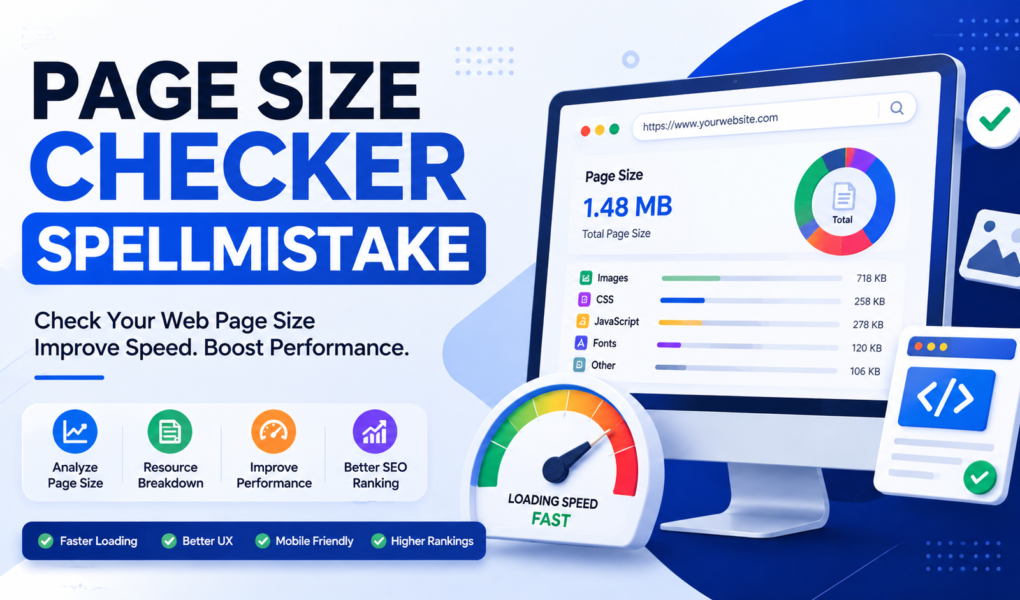
The term page size checker spellmistake has gained attention among website owners, bloggers, developers, and digital marketers who want to understand how webpage size affects overall website performance. As websites continue to include more images, videos, scripts, and interactive features, monitoring page size has become an important part of maintaining a fast and efficient online presence. Understanding the size of a webpage helps identify elements that may be slowing down the user experience.
A page that contains too many large files can take longer to load, particularly for visitors using mobile devices or slower internet connections. This can lead to frustration, reduced engagement, and missed opportunities for website owners. Tools associated with page size checking provide useful insights that make it easier to improve loading times and create a smoother browsing experience for visitors.
Quick Details
| Detail | Information |
|---|---|
| Keyword | Page Size Checker SpellMistake |
| Category | SEO Tools & Website Performance |
| Purpose | Measures the total size of a webpage |
| Main Function | Analyzes webpage resources and file sizes |
| Used For | Website optimization and performance monitoring |
| Helps Improve | Page speed, user experience, and site efficiency |
| Key Components Checked | Images, CSS, JavaScript, HTML, fonts, and media files |
| Measurement Units | Kilobytes (KB) and Megabytes (MB) |
| Primary Users | Bloggers, website owners, developers, and marketers |
| SEO Benefit | Supports faster-loading pages and better user engagement |
| Mobile Benefit | Improves performance on smartphones and tablets |
| Common Issues Found | Large images, excessive scripts, heavy media files |
| Optimization Methods | Compression, caching, minification, and image optimization |
| Importance | Helps identify factors that slow down webpages |
| Best For | Websites seeking better speed and performance |
| Website Type | Blogs, business websites, e-commerce stores, portfolios, and news sites |
| Main Goal | Reduce page weight and improve loading times |
| User Advantage | Faster browsing experience and reduced data usage |
| Technical Focus | Webpage size analysis and performance improvement |
| Overall Value | Useful tool for maintaining a fast and efficient website |
What Is Page Size Checker SpellMistake?
Page Size Checker SpellMistake generally refers to a webpage analysis tool that measures the total size of a website page. The tool scans the resources required to display a webpage and calculates how much data must be downloaded before the page is fully loaded. This information is valuable because it helps website owners understand whether their pages are optimized for speed and performance.
The keyword itself is often searched by individuals looking for ways to analyze website efficiency and identify performance issues. Although the phrase may appear unusual, the focus remains on understanding webpage size and improving website functionality. By measuring page weight, users can gain a clearer picture of how their websites perform across different devices and network conditions.
Why Page Size Matters
Page size plays a direct role in determining how quickly a website loads. Every image, script, stylesheet, font, and media file contributes to the overall size of a webpage. When these resources become too large, browsers require more time to download and display the content. This delay can affect how visitors interact with the site and influence their overall impression of the experience.
A slow-loading website can create challenges for both users and website owners. Visitors often expect information to appear almost instantly, and delays may encourage them to leave before engaging with the content. Keeping page size under control helps improve usability, supports better navigation, and ensures that visitors can access information without unnecessary waiting.
How Page Size Checker SpellMistake Works
A page size checker works by analyzing all of the resources connected to a specific webpage. After a URL is entered into the tool, the system examines the files that are required to load the page. This includes visible elements such as images and text, as well as background resources that help control design and functionality.
Once the analysis is complete, the tool calculates the total amount of data being transferred. Results are typically displayed in kilobytes or megabytes, making it easier to understand the overall weight of the page. Some tools also provide a detailed breakdown of individual resources, allowing website owners to identify which elements contribute most to page size.
Main Features
One of the most useful features of a page size checker is its ability to provide a complete overview of webpage resources. Instead of showing only a total size figure, many tools separate the results into categories such as images, scripts, stylesheets, and external resources. This level of detail helps users understand exactly where optimization opportunities exist.
Another valuable feature is performance reporting. These reports highlight areas that may be affecting loading speed and provide insights into resource usage. By reviewing this information regularly, website owners can make informed decisions about design changes, content updates, and technical improvements that support better performance.
Benefits of Using Page Size Checker SpellMistake
Using a page size checker can lead to noticeable improvements in website speed and efficiency. Faster websites provide a better experience for visitors because content becomes accessible more quickly. Reduced loading times can also encourage users to spend more time exploring pages and interacting with website features.
Performance improvements often extend beyond speed alone. Smaller pages generally consume less bandwidth, making them more accessible for users with limited data plans. Optimized pages also tend to perform better on mobile devices, helping website owners reach a wider audience while maintaining a consistent browsing experience.
Common Causes of Large Page Sizes
One of the most common reasons for excessive page size is the use of large image files. High-resolution photographs and graphics can dramatically increase webpage weight when they are uploaded without optimization. While visual quality is important, oversized images often contribute more data than necessary and can significantly slow down loading times.
Additional factors include heavy scripts, complex styling files, embedded videos, and third-party integrations. Many websites accumulate these resources over time, resulting in pages that become larger and more difficult to load efficiently. Regular monitoring helps identify these issues before they begin affecting website performance.
Ideal Page Size for Websites
There is no universal page size that works for every website because different projects have different requirements. A content-focused blog may naturally have a smaller page size than an online store that includes product galleries, interactive features, and promotional media. Even so, keeping page size as low as possible remains a common goal across all types of websites.
Modern websites benefit from balancing visual appeal with performance. A well-designed page should provide engaging content without overwhelming visitors with excessive downloads. Maintaining reasonable page sizes helps create a faster and more responsive experience that supports both usability and long-term growth.
Ways to Reduce Page Size
Reducing page size often begins with optimizing images. Compressing graphics and using modern file formats can significantly lower file sizes while preserving visual quality. This simple adjustment can have a major impact on loading speed, especially for websites that rely heavily on visual content.
Additional improvements can be achieved by minimizing unnecessary code, reducing unused resources, and enabling file compression technologies. These techniques help decrease the amount of data transferred between the server and the visitor’s browser. Over time, consistent optimization efforts can lead to substantial performance gains.
READ MORE: Eileen Gu Family Background: Parents, Childhood, and Journey
FAQs
What is Page Size Checker SpellMistake?
Page Size Checker SpellMistake is a webpage analysis tool or keyword associated with measuring the total size of a website page. It helps users understand how much data a webpage contains and identify elements that may affect loading speed and overall performance.
Why is page size important for a website?
Page size directly impacts how quickly a webpage loads. Smaller and optimized pages generally provide a faster browsing experience, improve user satisfaction, and make websites more accessible across different devices and internet connections.
How does a page size checker work?
A page size checker scans a webpage URL and analyzes all resources needed to load the page, including images, CSS files, JavaScript files, fonts, and media content. It then calculates the total size and displays the results in kilobytes or megabytes.
What causes a webpage to have a large page size?
Large images, uncompressed videos, excessive JavaScript, complex CSS files, third-party scripts, and unnecessary plugins are some of the most common reasons for increased page size. These elements can significantly affect website performance if not properly optimized.
Can reducing page size improve SEO?
Yes, reducing page size can contribute to better website performance, which supports faster loading speeds and a smoother user experience. Since website speed is an important factor in overall site quality, optimization efforts can positively influence search visibility and user engagement.