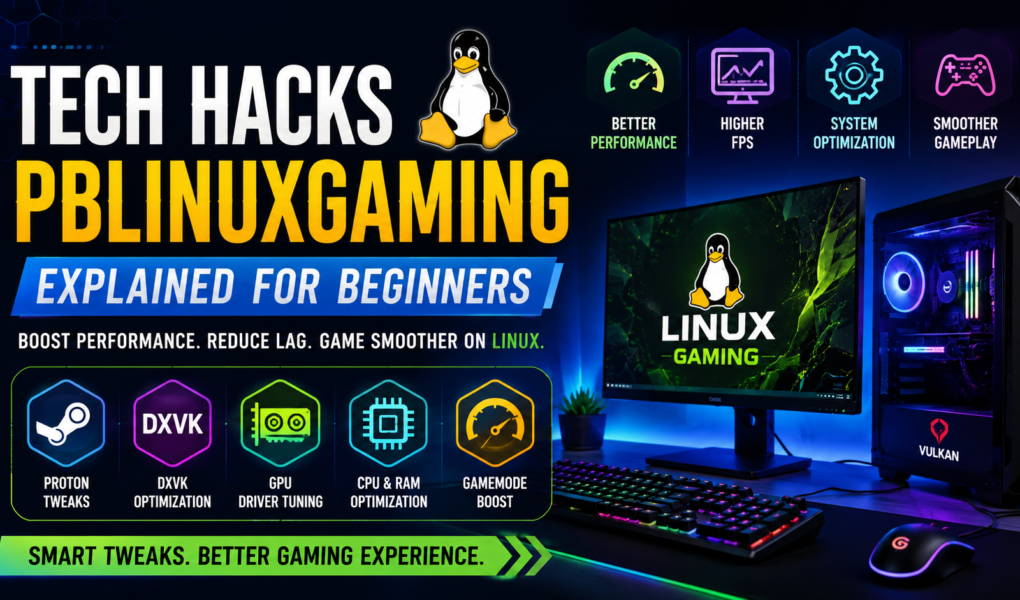
Linux gaming has developed into a serious space for players who want more control over performance and system behavior. Over the past few years, the ecosystem has grown because of improved drivers, better compatibility layers, and community-driven tools that allow Windows-based games to run smoothly on Linux systems. Still, getting the best experience often requires thoughtful system adjustments that go beyond default settings.
Tech hacks PBLinuxGaming refers to practical optimization methods used by gamers to improve performance, stability, and compatibility on Linux. These are not illegal modifications but rather system tuning techniques that help games run more efficiently. The idea is to get smoother gameplay, better frame rates, and reduced lag by adjusting how Linux handles gaming workloads.
Quick Details
| Category | Information |
|---|---|
| Keyword | Tech Hacks PBLinuxGaming |
| Concept Type | Linux Gaming Performance Optimization |
| Purpose | Improve FPS, reduce lag, enhance system performance |
| Platform | Linux (Ubuntu, Arch, Fedora, SteamOS) |
| Main Tools | Proton, Wine, GameMode, DXVK, MangoHud |
| Focus Area | CPU, GPU, RAM optimization and compatibility tuning |
| Difficulty Level | Beginner to Intermediate |
| Benefit | Smoother gameplay without hardware upgrade |
What PBLinuxGaming Means
PBLinuxGaming stands for Performance Boost Linux Gaming, a concept that focuses on improving gaming experiences through system-level tuning. It does not represent a single software or application but rather a collection of practices used by Linux gamers to extract better performance from their hardware. This approach has become more relevant as Linux continues to grow as a gaming platform.
At its core, PBLinuxGaming is about understanding how Linux interacts with games and using that knowledge to reduce inefficiencies. Instead of relying on default system behavior, users apply targeted improvements that help games utilize CPU, GPU, and memory resources more effectively. This allows even mid-range systems to deliver more stable gaming performance.
Understanding Tech Hacks in Linux Gaming
Tech hacks in Linux gaming are best understood as optimization techniques that adjust system behavior for better performance. These include improving how system resources are allocated, enhancing graphics processing, and ensuring compatibility between Windows games and Linux environments. The flexibility of Linux makes these adjustments possible without requiring specialized software.
Many of these techniques are supported by widely trusted open-source projects and documentation. Communities such as Arch Wiki, WineHQ, and Valve’s official Linux gaming ecosystem provide guidance on how these optimizations work. Rather than being shortcuts, these methods are based on deep system understanding and continuous development in the Linux gaming space.
Performance Improvements in Gaming
One of the main goals of tech hacks PBLinuxGaming is improving game performance in real-time scenarios. This includes achieving smoother frame rates, reducing sudden stutters, and ensuring consistent gameplay even in graphically demanding titles. These improvements are often noticeable without changing hardware, making them highly valuable for gamers with limited system resources.
Performance gains come from reducing unnecessary background processes and optimizing how the system prioritizes gaming tasks. Linux allows users to control these processes more directly than many other operating systems. As a result, games can receive more CPU and GPU attention, which translates into better responsiveness and smoother visual output.
GameMode and System Optimization
One important tool in Linux gaming optimization is GameMode, developed to automatically adjust system settings during gameplay. It temporarily prioritizes gaming performance by changing CPU scheduling behavior and reducing system interruptions. This allows games to run more efficiently without manual configuration each time.
GameMode is widely used in modern Linux gaming setups and integrates smoothly with platforms like Steam. It works in the background and activates when a game starts, ensuring that system resources are directed toward the game instead of background tasks. This simple adjustment can significantly improve performance stability.
Proton, Wine, and Compatibility Layer Enhancements
Running Windows games on Linux is made possible through compatibility layers such as Proton and Wine. Proton, developed by Valve, is designed specifically for Steam gaming and simplifies the process of running Windows-only titles on Linux systems. Wine provides the foundational compatibility framework that allows Windows applications to function in Linux environments.
These tools work by translating Windows system calls into Linux-compatible instructions. This process allows games to run without native Linux versions while still maintaining strong performance. Continuous improvements in these compatibility layers have made Linux gaming far more practical than in previous years.
Graphics Optimization with DXVK
Graphics translation plays a major role in Linux gaming performance, especially for titles built on DirectX. DXVK is a key component that converts DirectX graphics calls into Vulkan instructions, allowing games to run more efficiently on Linux. Vulkan is a modern graphics API that provides low-level access to GPU resources.
By using DXVK, games that were originally designed for Windows can achieve performance levels closer to native execution. This reduces rendering overhead and improves frame stability. Combined with updated GPU drivers, this approach significantly enhances visual performance and responsiveness.
Monitoring Tools and System Awareness
Performance monitoring is an important part of optimizing gaming on Linux. Tools like MangoHud provide real-time information about FPS, CPU usage, GPU load, and system temperatures. This helps users understand how their system behaves during gameplay and identify performance bottlenecks.
MangoHud integrates directly with games and overlays performance data without disrupting gameplay. By observing this information, users can make informed decisions about further optimization. It also helps in comparing performance before and after applying system tweaks, making optimization more structured and effective.
GPU Drivers and Hardware Optimization
Graphics drivers are essential for achieving stable and high-performance gaming on Linux. Both NVIDIA and AMD provide drivers that are regularly updated to improve compatibility and fix performance issues. Keeping these drivers updated ensures that the system can fully utilize the capabilities of the GPU.
Hardware optimization also involves ensuring that the system is not overloaded with unnecessary processes. By managing system resources carefully, Linux can allocate more power to gaming tasks. This results in better frame rates and reduced latency during gameplay, especially in demanding titles.
Challenges and Limitations
Despite its advantages, Linux gaming optimization is not without challenges. Some games still face compatibility issues, particularly those with strict anti-cheat systems or Windows-specific dependencies. These limitations can prevent certain games from running properly even with advanced tools.
Another challenge is the learning curve involved in system tuning. While Linux offers powerful customization options, beginners may find it difficult to understand all available settings. Incorrect configurations can also lead to reduced performance, which is why gradual adjustments and careful testing are important.
Future of Linux Gaming Optimization
The future of Linux gaming is moving toward greater automation and improved compatibility. With the growing success of platforms like the Steam Deck, developers are focusing more on optimizing games for Linux-based systems. This is gradually reducing the need for manual tweaks and technical adjustments.
As technologies like Proton and Vulkan continue to evolve, many of today’s optimization techniques may become built-in features. This shift suggests a future where Linux gaming becomes more accessible while still offering high performance. Until then, tech hacks PBLinuxGaming remains an important approach for achieving the best possible gaming experience.
READ MORE: Ticket 2021 Websites for GamificationSummit: Features, Benefits, and More
FAQs
What is Tech Hacks PBLinuxGaming?
Tech Hacks PBLinuxGaming refers to a set of performance optimization methods used in Linux gaming. It focuses on improving FPS, reducing lag, and enhancing system efficiency using system tuning and gaming tools.
Is Tech Hacks PBLinuxGaming safe to use?
Yes, these techniques are generally safe because they are based on system optimization and open-source tools. However, incorrect configuration can affect performance, so changes should be applied carefully and gradually.
Can these tech hacks improve FPS on Linux?
Yes, in many cases FPS improves because system resources are better managed. Tools like GameMode, Proton, and DXVK help games use CPU and GPU more efficiently, resulting in smoother gameplay.
Do I need advanced Linux knowledge for this?
No, beginners can start with basic tools like Steam Proton and GameMode. Advanced tweaks require more understanding, but most improvements can be applied without deep technical skills.
Which tools are most important for beginners?
For beginners, the most useful tools include Steam Proton for compatibility, GameMode for performance boost, and MangoHud for monitoring system performance during gameplay.